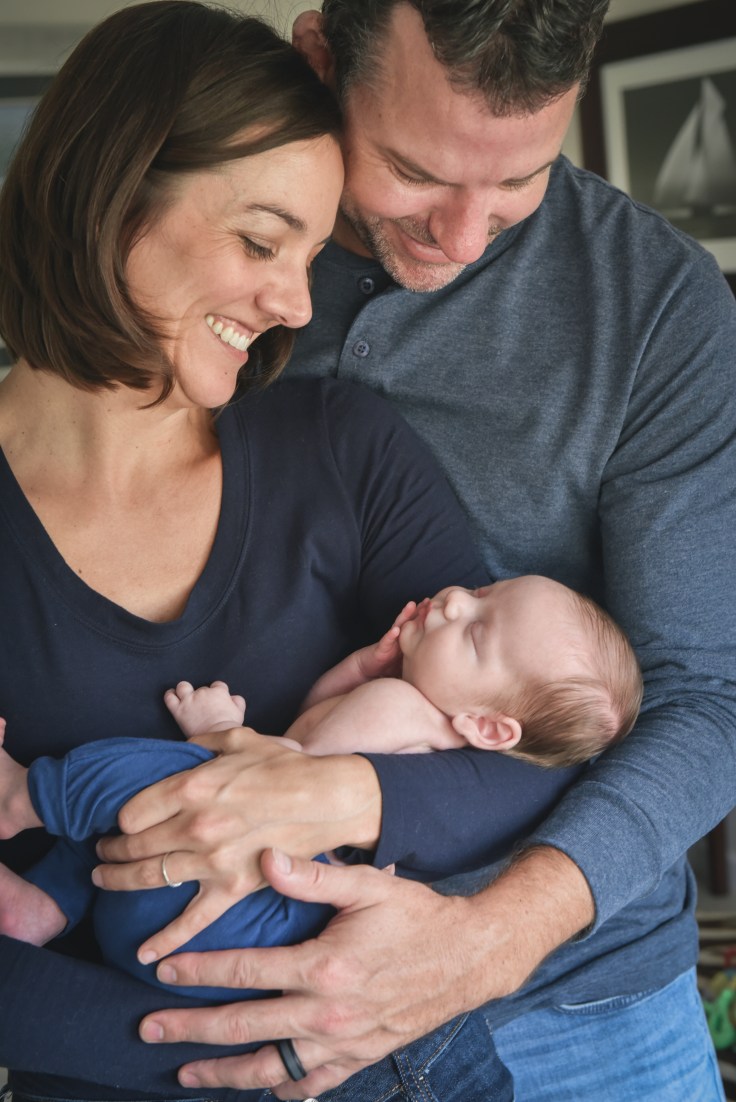
I am going to jump straight to the good news: we have a baby! He is a few months old, fat, demanding, and perfect. My egg, my husband’s sperm, another woman’s womb. For those of you who are planning IVF, or surrogacy, this is our story. I hope it educates and encourages you.
A year and a bit after my hysterectomy, my husband and I began investigating surrogacy. I had mixed feelings about surrogacy. I felt that we would be taking advantage of another woman’s desperation and/ or it was selfish not to adopt when there are so many children in need of a loving home. Speaking with one of my girlfriends started to change my mind about us “using” someone to carry our baby. She said some women actually love being pregnant and feel great about carrying children for someone else; that a surrogate would feel excited and enjoy carrying our baby had never occurred to me. Then we met with a lady who had been a surrogate, get this, eight times. She expressed her joy and pleasure at seeing the faces of the parents when they first hold their baby. She felt she was gifted to do this and it was her privilege to give those couples the chance to have a baby of their own genetic material. Foster care and adoption is still something my husband and I may pursue later but having a child that holds our genetic material felt good and right, and I believe that our son was God’s will for us, and our wider family circle.
Our next step was consulting with a lawyer who handles surrogacy cases. There are many legal implications and processes that are followed, differing in each country/ state, but I am going to leave that part out because you will be able to do your own research into the laws governing surrogacy in your home country/ state. The medical process for IVF and a surrogacy is the roughly the same, except, obviously, you will be using someone else’s womb. The first stage is a lot of blood tests for both you. They will test you, the woman, for HIV, Hepatitis, FSH (follicle stimulating hormone), as well as other hormones. Your husband will have the HIV and Hepatitis blood tests and he will also need to have his sperm tested. (It’s pretty funny driving your husband’s sperm to the doctor’s rooms). After the tests you start the fertility treatments, be warned, the hormones do mess you up and the emotions surrounding “the why” don’t help either.
A quick recap of high school biology again: all girls are born with their allocated number of eggs. You release a mature egg every month once you reach puberty. This is called ovulation. IVF stimulates the eggs (also called ovum) artificially, forcing them to mature. The doctor extracts these mature ovum. As you get older the number of eggs has dropped, after 35, this number has been greatly reduced. I was 34 years old when we started this process.The process for IVF is: the woman will inject hormones into her stomach for approximately 10 days, followed by the minor procedure to extract her mature eggs. The hormone injections are to stimulate your ovaries to release a greater number of mature eggs than usual (ovulation induction). The hormones used are gonadotrophins follicle stimulating hormone (FSH) and luteinising hormone (LH). As I had had a hysterectomy, the top of my vagina is sewn closed so the procedure was a minor surgery, requiring me to have a general anesthetic. This is not the case for usual IVF procedures. You would be usually be awake for this procedure and I understand it is very uncomfortable. Your husband also does his bit in a dodgy room. Not a pleasant experience for either of you.
The physical toll of IVF is followed by the emotional rollercoaster of waiting for the results of your fertilized embryos. If your husband’s sperm are strong, then, the usual practice, is to add the sperm to a beaker of your (the woman’s) eggs and let nature take its course. If your husband has weak swimmers, they will inject the sperm into the eggs. An egg that has a sperm inside it becomes a fertilized embryo. After five days the embryos that have survived, and have divided enough times, have reached what is called “the hatching blastocyst” phase. These embryos are now ready for genetic testing, if advised by your doctor, or implanting directly into the prepared womb (called a fresh implant), or freezing for a later implant. Freezing unfertilized eggs makes them 50% less viable but embryos are hardier and, freezing embryos, according to current research, doesn’t seem to change their effectiveness.
The first egg retrieval gave us thirteen eggs and after fertilization, we had three embryos that made it to the hatching blastocyst phase. We had them genetically tested: one came back with all the chromosomes, which meant only one had a chance of becoming a baby. We froze this embryo to use later. The second retrieval gave us six eggs and two embryos, which we were then advised not to test, as the results in-house were that untested embryos were more successful that the tested. Our doctor felt that messing with the embryos as little as possible, keeps things as close to the natural order of things. We followed his advice. The third retrieval resulted in 11 eggs and 6 embryos. This all took place over a one year period.
When we engaged our surrogate, we only had the one embryo. We had an agonizing two week wait before she had the blood tests that told us that she wasn’t pregnant. I think she was almost as disappointed as me. She and I both cried buckets. I did a lot of second guessing then, I thought that maybe God wasn’t behind this but after a lot of tears and prayer I realized His timing is not ours and His ways are not ours. There were also things happening in our lives at the time that made me think, maybe God knows what He is doing, maybe we need more time, maybe we needed (I needed) this disappointment to know it isn’t my prayer, or my good works that accomplishes anything. We then did the second egg retrieval and then they implanted a second time. This was a fresh transfer of two embryos, i.e.: we didn’t freeze the embryos. We had timed her treatment and the retrieval so her womb was ready on the sixth day after my extraction. I was convinced this would be it, however, the second implant was a bust. Our usual doctor wasn’t available, someone else did the implant, and the surrogate was hurt during the transfer and had excessive discharge following. The disappointment was severe. It was tough both times but because we felt the doctor had screwed up, we were disillusioned. Our usual doctor promised us he would be completely available the third time. The third implant was successful. Coincidentally, before we did the third transfer, I was talking with a girlfriend who had just had her baby after six IVF procedures, the first five had failed. She told me about a drug that her fertility doctor had used on her for her sixth procedure. A drug called “Atosiban”. I told my doctor about this and he said that was interesting as it is a drug used to stop miscarriage as it stops the uterus contracting. He used it for our third transfer, it worked, whether that was due to the drug or not.
The drugs the surrogate took prior to the implants were: estrogen which thickens the lining of the uterus, meticorten which is a low dose of cortisone which limits the risk of miscarriage by helping the body to accept the “foreign object” of someone else’s embryo, and crinone which is a progesterone which she had in gel form and its inserted into vagina daily before the implant and for three months after a positive pregnancy result (sounds awful doesn’t it – woman needs a medal).
Finding out she was pregnant was the most wonderfully, overwhelming feeling. My husband and I were thrilled but suddenly daunted too. Our lives were now on a new trajectory. We told our parents right away and swore them to secrecy. They, and we, had a really hard time keeping the secret for twelve weeks. The rest of the pregnancy was intense and distant at the same time. I felt somewhat removed from the growing-the-baby-process and it was tough to not carry him myself and experience him moving for the first time, etc. I also felt this pressure to be building a relationship with the fetus that some mothers describe and the whole the-baby-needs-to-recognize-your-voice thing scared and frustrated me. We sent our son voice-notes which the surrogate played to him but I worried that it wasn’t enough. Just so you know, my experience has been that the baby and you don’t know each other from the time he/ she is born, and that is ok. You love and care for him, first from necessity, and obviously because you want to great job as his mom, but after 4 months old the person he was becoming started to come out and the love I felt for him grew from getting to know him, and seeing him start to know and love me in return. It is a little like falling in love. It didn’t happen all at once like a bolt of lightning and some of my girlfriends who carried their own kids admit this to be true for them too. My son shows no signs of being ill-affected by not being carried by me. He is content and seems to love his mommy and daddy as though we were the only mommy and daddy he needs. A friend that I love very much did express to me what I had sensed some people thinking, she said: “You know, when I heard you were having a baby like this, I did wonder how would you handle being a mother, because well, you would have a hard time bonding with a baby that you didn’t carry”. The implication, I felt, was that some people felt that he wasn’t truly mine and that I wouldn’t be able to be a good/ real mother becauseI had not carried him. Some people think that you become a mother by being pregnant and, before our son was born, maybe I thought there was some truth to that but I don’t any more. Pregnancy doesn’t make you a mother, the hormones don’t make you a mother. Loving your baby, being there, caring for his every need, playing with him, teaching him, going without sleep and food, sharing those special looks when you see your love reflected in his eyes, that makes you a mother. Anyway, I digress…
At the 20-week fetal anomaly scan we found out we were having a boy. The surrogate was already in on the secret as she’d seen his boy bits in a previous scan which I had been unable to attend. My husband, like all dads, was over-the-moon that he was having a son. I was so moved by the scan and seeing the intricately woven together, perfect, tiny form of our baby. You could see the chambers of his heart fluttering even though it was only the size of an olive. I could see from the shape of his foot that he had exactly the same foot as his Daddy. I cried, again, it was so beautiful. I kept thinking of Psalm 139: “For you created my inmost being; you knit me together in my mother’s womb. I praise you because I am fearfully and wonderfully made…” This was a miracle and a specially designed blessing from heaven.
We had planned to be in the same town as the surrogate from week 34, allowing us a full six weeks to prepare for the baby. I had a baby shower planned and everything. But “best laid plans” and all that. On a Tuesday morning during the 33rd week of pregnancy, at 6am we got a call to say the surrogate was 1cm dilated and there was some bleeding. I called the head of the agency and was told that she had gone into labour and was waiting for an ambulance to take her to our chosen hospital where the right team of specialists would be waiting to try and stop the labour but she said that we needed to get there ASAP. We threw our stuff into bags and got the last two flights out arriving well after our son was delivered and in neonatal ICU. We spoke to the pediatrician who delivered him and were told that he had struggled and had been without oxygen for 2 minutes. They had given him two doses of surfactant which is an artificial substance that mimics the oil needed for the lung sacs to expand. Our first view of him was terrifying. He had a tube on every hand and foot, a CPAP machine assisting him with breathing and he was under the light with his eyes covered for jaundice. Not how I had pictured our first face-to-face.
We found out later that the surrogate had had a placental bleed which could have drowned our baby had she not gone in to premature labour. Stopping the labour would have also killed him because the doctors did not know about the placental bleed until during the cesarean section. Fortuitously, our surrogate had arrived at the hospital already 4cm dilated and by the time she went into the operating room, she was 6cm dilated and in a lot of pain, so stopping the labour was out of the question. We saw photos of her with blue all around her eyes from the incredible pain, then her getting a spinal tap, and the relief on her face when the pain went away (labour looks hardcore). When we saw her in hospital, she was so worried for our baby and so sorry that things had happened the way they had. She is such a sweet lady. We were so glad that she and our son were safe and in the best possible hands.
Every few days there was another success with our baby boy. After three days he didn’t need the CPAP. We got to hold him and have skin-on-skin contact. After a week he was moved out of ICU and into High Care. A few days later he didn’t need to have the jaundice light and we could see his eyes. He was in the hospital for three weeks but the time went quickly. We got to feed him bottles in the last few days because until he was feeding we couldn’t take him home. One of our big concerns was medical aid paying but they came through for us without any hassle.
One of the funny things was the other mom’s reactions to me because I obviously looked great in comparison. I mean, come on, I hadn’t just given birth. Of course I told them all why and although I would never have wanted things to happen the way they have, its certainly been a bonus to not have the pain, or the baby weight to lose. (I feel its important to add here that I had a lot of pain having a radical hysterectomy and my pelvic lymph nodes removed so maybe I’d just done my bit).
People often ask me what about afterwards, wasn’t the surrogate sorry to give up a baby? She and I are still in touch and I can safely say she never felt like she was giving him up. She never felt like he was her baby. She loves him because she treasured him for us and gave so much of herself to bring him into this world but she is happy to have made our dreams come true by giving us this incredible gift. I can only imagine, although she has never said as much to me, that there is a feeling of loss at the end for the surrogate. When the excitement is over and you go back to your life, you are sore, with no baby to show for it. So, there must be a grieving process but, I think, as long as the support is there: from the IPs (Intended Parents), healthcare professionals and her own friends and family, it is surmountable. I think it is very important that she, and her immediate family, get closure by seeing you with your baby after all the chaos in the delivery room is over. I also think that you shouldn’t stop communicating just because she has fulfilled her use to you. We are all different and we were incredibly blessed by who she is as a person so prolonging our relationship has been no effort. I think the communication between the IPs and surrogate can faze out in a natural way. As a new mother you are so busy, tired and overwhelmed so you don’t have much time for texting anyway, and the surrogate moves on with her own life too, but, in the first 3 months, I would text her a pic every week or so and tell her what was going on. She was very encouraging to me as a new mom and offered sound advice. Still to this day (two years later) we message every few months and I will stay in touch with her for as long as it feels natural which, may well be forever. I know another surrogate who still meets her IP for coffee a few times a year and the IP is like a mentor to her. But, I also know of other surrogates and IPs who had negative experiences in their dealings with one another. It can be a complicated situation and it is important to have the right support for both parties, legally and emotionally. The lawyer who draws up the contract is instrumental in ensuring that everyone adheres to what is prescribed in the agreement. Also, there are agencies who perform a “matchmaking service” between surrogates and IPs and provide the necessary support throughout the process.
1 Samuel 1:27 “For this child I have prayed and the Lord has granted me the desire of my heart”.
 undividedspirit
Leave a comment